Environmental Stress Screening (ESS): Improving Product Reliability
Environmental Stress Screening (ESS) is a controlled manufacturing process used to detect latent defects early in production, when they are the least expensive to correct. By subjecting products to environmental stresses such as temperature cycling, ESS accelerates the appearance of hidden defects before products reach customers. This proactive approach helps manufacturers improve product reliability, reduce warranty claims, and minimize costly field failures.
What Is Environmental Stress Screening?
Environmental Stress Screening is a manufacturing process designed to identify defects in electronic assemblies that may not be detected through visual inspections or electrical testing alone.
Unlike traditional acceptance testing, failures during ESS are expected. These failures expose defects related to components, materials, or workmanship that could otherwise result in early-life failures after shipment. By identifying these weaknesses during production, manufacturers can take corrective action before products enter service.
ESS Is a Process, Not a Test
Environmental Stress Screening should not be viewed as a simple pass/fail test. Instead, it is a carefully controlled process that must be properly designed and managed to ensure consistent and repeatable results.
When implemented correctly, an ESS program can reduce field repair expenses, minimize production waste, lower overall manufacturing costs, and improve both product quality and customer satisfaction. The ultimate goal is to improve long-term reliability while reducing the total cost of ownership.
Why Temperature Cycling Is Critical to ESS
Temperature cycling is widely regarded as the most effective environmental stress screening method for uncovering latent defects.
By exposing products to controlled temperature extremes and rapid temperature transitions, manufacturers can identify weaknesses in materials, components, and assemblies before they lead to failures in the field. Temperature cycling helps ensure that all components experience uniform stress, increasing the likelihood of detecting hidden defects while improving the overall effectiveness of the screening process.
Factors such as temperature range, ramp rate, airflow, and the number of cycles all play a significant role in the success of an ESS program.
Equipment and Process Considerations
The effectiveness of Environmental Stress Screening depends on both the screening process and the equipment used to perform it.
Successful ESS programs require careful consideration of chamber design, airflow management, temperature uniformity, moisture control, and electrical instrumentation. Whether using traditional ESS chambers, isolated evaporator designs, or thermal shock systems, maintaining consistent and repeatable conditions is essential to achieving meaningful results.
Proper electrical connections and monitoring systems are equally important, ensuring accurate data collection throughout the screening process.
Why
Environmental Stress Screening Matters
The primary advantage of ESS is its ability to shift failures from the field to the factory, where they can be identified and corrected at a much lower cost.
As products move through their lifecycle, the cost of repairing defects increases significantly. Detecting and correcting problems during manufacturing helps reduce warranty expenses, improve customer satisfaction, and strengthen overall product reliability.
For organizations focused on quality, reliability, and long-term performance, Environmental Stress Screening is a valuable tool for reducing risk and improving operational efficiency.
Read the Full Environmental Stress Screening White Paper
This overview provides a high-level introduction to Environmental Stress Screening and its role in improving product reliability.
The full white paper explores ESS methodologies, temperature cycling strategies, equipment considerations, failure analysis techniques, and implementation best practices in greater detail.
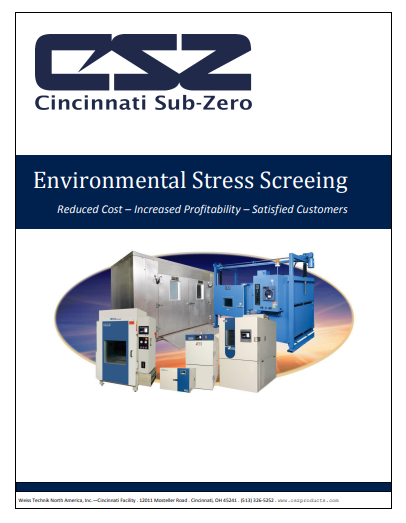
Download the full white paper to learn how Environmental Stress Screening can help identify latent defects, improve manufacturing quality, and increase product reliability.