How Are Humanoid Robots Tested for Real-World Environmental Conditions?
Humanoid robots are rapidly transitioning from research projects and prototype demonstrations into practical tools for manufacturing, logistics, warehousing, energy, and other industrial applications. Driven by labor shortages, rising productivity demands, and advances in robotics technology, the humanoid robot market is expected to grow significantly over the coming decades. As investment continues to increase, manufacturers are moving these systems beyond research environments and into real-world industrial applications.
Major manufacturers and technology companies are already testing advanced robotic platforms in pilot industrial deployments. Early applications include parts handling, machine tending, assembly support, logistics operations, and quality inspections. Companies such as Figure AI, Tesla, and Apptronik are actively working to move humanoid robots from controlled testing environments into day-to-day industrial operations.
As adoption increases, manufacturers face a critical challenge: ensuring these highly complex systems can operate reliably in the environments where they are expected to work.
As humanoid robots move into real-world applications, they will likely be required to operate in a wide range of environmental conditions. Future deployments could include cold storage warehouses, mining operations, steel mills, outdoor logistics yards, desert solar farms, and other industrial environments where extreme temperatures, humidity, dust, and continuous operation can place significant stress on robotic hardware. Before deployment, manufacturers must understand how these conditions affect batteries, sensors, electronics, actuators, and other critical systems.
What Environments Must Humanoid Robots Be Designed to Operate In?
Examples include:
- Cold Storage Warehouses – Low-temperature battery, electronics, and sensor performance
- Manufacturing Facilities & Steel Mills – Heat exposure and continuous operation
- Mining & Heavy Industry – Dust, vibration, and harsh operating conditions
- Outdoor Energy & Solar Sites – Temperature swings, humidity, and environmental exposure
From Controlled Environments to Real-World Industrial Applications
Unlike traditional industrial robots that often remain in a fixed location performing repetitive tasks, humanoid robots are designed to operate in spaces built for people.
These systems may move throughout a manufacturing facility, support operations in a cold storage warehouse, assist workers in mining or energy applications, perform inspections at outdoor facilities, or transition between climate-controlled and outdoor environments. This flexibility is one of the technology's greatest advantages, but it also creates additional design and reliability challenges.
A robot that performs well in a development lab may encounter very different conditions once deployed in the field. Temperature fluctuations, humidity, vibration, dust, transportation, and continuous operation can all impact performance.
Because humanoid robots integrate sophisticated electronics, sensors, batteries, actuators, motors, and mechanical assemblies, engineers must understand how these systems respond to environmental stress long before commercial deployment.
Unlike many traditional automation systems, a humanoid robot combines mobility, sensing, computing, and power management into a single platform, increasing the number of potential failure points that must be evaluated.
That's why environmental testing is a critical part of robotic hardware development and validation.
Why Environmental Testing Matters for Humanoid Robots
Humanoid robots depend on the seamless interaction of numerous hardware systems. Sensors collect information, batteries provide power, actuators create movement, and onboard electronics process data and control operations. If one system experiences performance degradation, the reliability of the entire robot can be affected.
Environmental testing for these systems helps engineers evaluate how components and assemblies perform under conditions that closely simulate real-world use. Effective humanoid robot testing allows manufacturers to identify potential reliability issues before systems are deployed in industrial environments.
Temperature and Humidity Testing
|
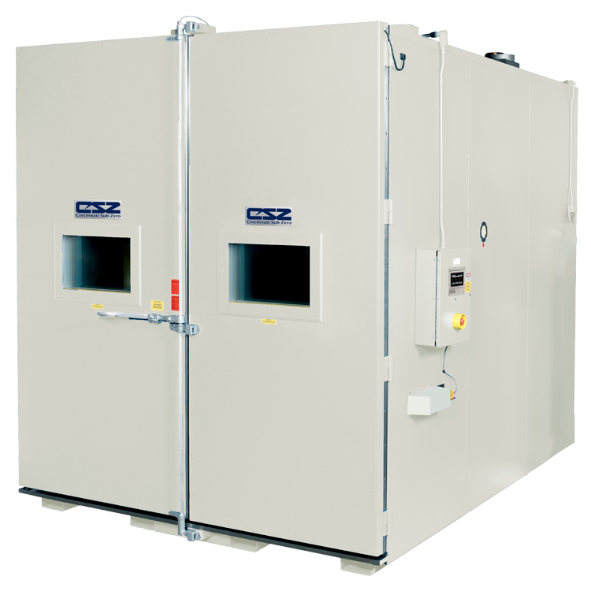
Humanoid robots intended for harsh operating environments must maintain reliable performance despite exposure to extreme temperatures and humidity levels. Whether working in a refrigerated warehouse, a hot manufacturing facility, a humid processing plant, a dusty mining operation, or an outdoor environment exposed to seasonal weather changes, environmental conditions can place significant stress on robotic hardware.
Environmental testing helps engineers simulate these conditions in a controlled setting before a robot is deployed in the field.
Temperature and humidity testing helps engineers evaluate how environmental conditions affect:
- Battery efficiency and performance
- Sensor accuracy
- Electronic reliability
- Actuator responsiveness
- Mechanical system operation
Testing across a range of environmental conditions helps manufacturers better understand performance limitations, validate reliability, and identify potential issues before deployment.
|
 |
Thermal Shock and Thermal Cycling
One of the most common environmental challenges for humanoid robots is transitioning between environments.
For example, a robot operating inside a climate-controlled facility may repeatedly move into an outdoor loading area exposed to extreme seasonal temperatures. Rapid temperature changes can create stress on electronics, connectors, seals, and mechanical assemblies.
Thermal shock and thermal cycling testing help engineers assess how components withstand repeated environmental transitions and whether those changes could impact long-term reliability.
Vibration Testing
Humanoid robots experience vibration throughout their lifecycle.
Sources of vibration may include:
- Walking and movement
- Material handling operations
- Transportation and shipping
- Repetitive manufacturing tasks
- Continuous daily operation
Vibration testing helps manufacturers identify weaknesses in electrical and mechanical systems before they result in field failures, reducing the risk of downtime and costly repairs.
Battery Testing
Battery performance is a critical factor in humanoid robot development.
Operating time, mobility, payload capability, and overall system performance all depend on battery reliability. Extreme environmental conditions can significantly affect battery behavior, making testing an important part of the development process.
Battery testing allows engineers to evaluate performance under a variety of operating conditions while gaining a better understanding of durability and lifecycle expectations. This is particularly important for mobile robotic platforms, where battery performance directly impacts runtime, mobility, and productivity.
HALT and Reliability Testing
Humanoid robots contain thousands of electronic and mechanical components working together as a single system.
Highly Accelerated Life Testing (HALT) and other reliability-focused testing methods help engineers identify potential failure points earlier in development. By exposing components and assemblies to stresses beyond normal operating conditions, manufacturers can uncover design weaknesses and improve product robustness before production begins.
Testing at the Component, Subsystem, and System Level
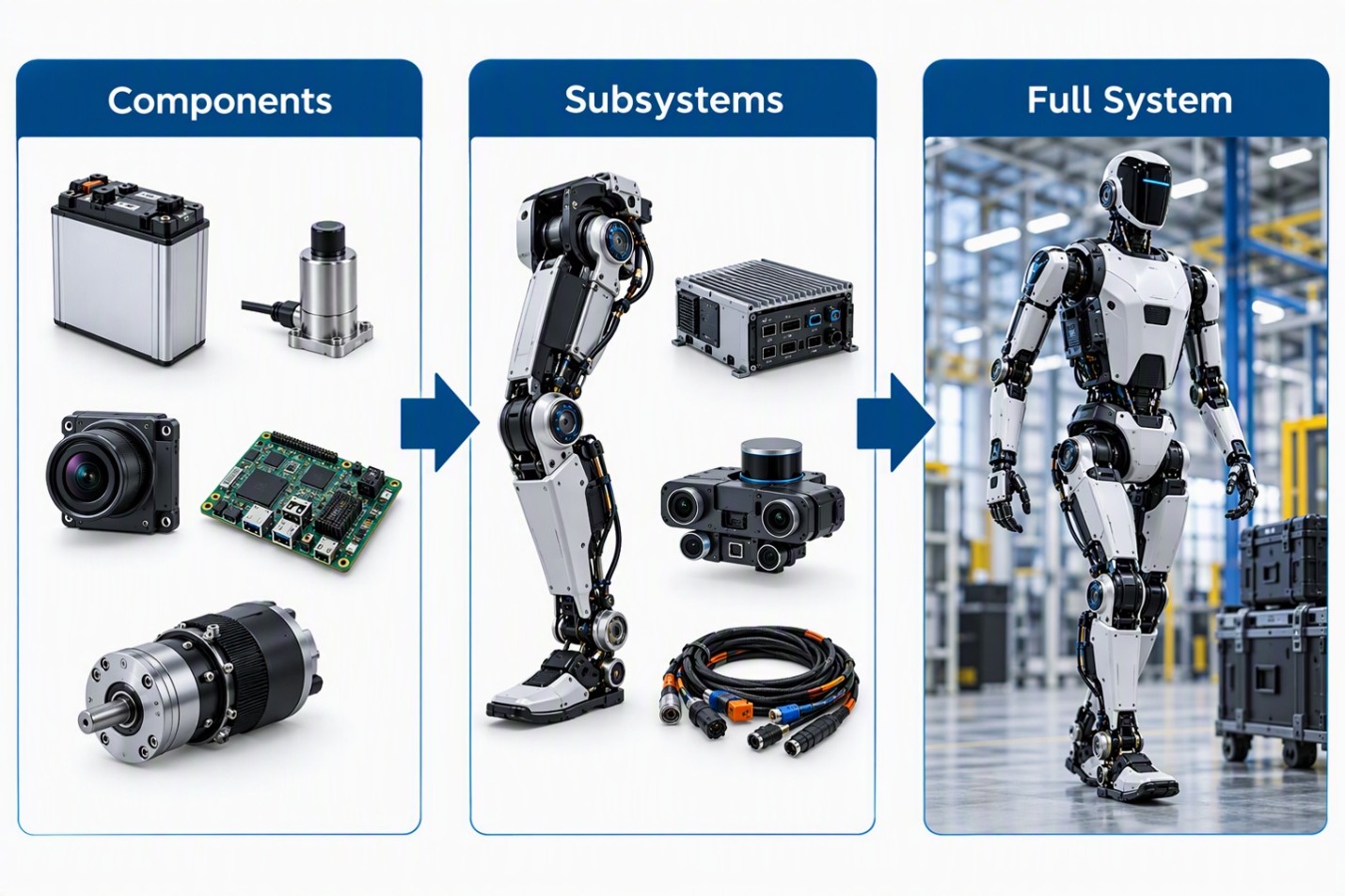
Environmental testing is often performed throughout development, from individual components and subsystems to fully assembled robotic systems.
Component-Level Testing
Many humanoid robot manufacturers begin by evaluating critical hardware components under environmental stresses before integrating them into larger assemblies and systems.
Examples include:
- Batteries
- Sensors
- Cameras and vision systems
- Motors
- Actuators
- Control electronics
- Connectors and wiring
Component-level testing helps engineers identify potential weaknesses early in development before they impact larger assemblies, subsystems, or complete robotic systems.
Subassembly and Subsystem Testing
Once components are integrated, testing often moves to subsystem-level validation.
Examples may include:
- Battery assemblies
- Motion control systems
- Sensor packages
- Vision systems
- Electronic control modules
- Joint and actuator assemblies
Subsystem testing allows engineers to evaluate how components interact with one another and determine whether performance changes when environmental stresses are introduced.
Full-System Validation
After component and subsystem testing, manufacturers often perform testing on fully assembled robots.
This stage helps evaluate how the complete robotic system responds to environmental conditions and real-world operating scenarios after component and subsystem testing has been completed. Engineers can assess how batteries, sensors, actuators, electronics, and mechanical systems work together while exposed to temperature changes, humidity, vibration, and other environmental factors.
Testing across all levels of development helps manufacturers build confidence in reliability, reduce risk, and identify issues before deployment.
How Are Environmental Test Chambers Used to Validate Humanoid Robots?
Environmental test chambers provide engineers with a controlled and repeatable way to evaluate robotic hardware before deployment. Depending on the stage of development, testing may be performed on individual components, integrated subsystems, or fully assembled robotic systems.
At the component level, manufacturers may test batteries, sensors, cameras, actuators, motors, and control electronics to identify potential weaknesses early in development.
As components are integrated into larger assemblies, environmental testing helps engineers evaluate how subsystems perform under realistic operating conditions and environmental stresses.
For complete robotic platforms, environmental chambers can be used to evaluate overall system performance before deployment. For full-sized humanoid robots, walk-in environmental chambers provide the space needed to validate system-level operation under controlled environmental conditions.
Improving Humanoid Robot Reliability Before Deployment
As humanoid robots move closer to widespread deployment, environmental testing will play an increasingly important role in ensuring long-term reliability and performance.
From batteries and sensors to actuator assemblies and fully integrated robotic systems, manufacturers must validate performance at every stage of development. Environmental testing helps engineers identify potential weaknesses early, reduce risk, and build confidence before products enter service.
CSZ's environmental simulation and testing solutions support component, assembly, subsystem, and full-system validation, helping manufacturers accelerate product development, improve reliability, reduce testing uncertainty, and gain confidence before real-world implementation.
As the humanoid robotics industry continues to grow, environmental testing will remain a critical step in transforming innovative robotic designs into reliable systems capable of meeting the demands of real-world industrial environments.
Frequently Asked Questions About Humanoid Robot Testing
How are humanoid robots tested for extreme temperatures?
Humanoid robots are tested in environmental chambers that simulate hot and cold operating conditions, allowing engineers to evaluate batteries, sensors, electronics, actuators, and overall system performance before deployment.
What environmental tests are performed on humanoid robots?
Common tests include temperature testing, humidity testing, thermal shock testing, vibration testing, battery testing, HALT testing, and full-system validation.
Why is environmental testing important for humanoid robots?
Environmental testing helps manufacturers identify potential reliability issues before deployment, reducing failures and improving long-term performance. It also helps engineers validate how robotic systems perform under real-world environmental conditions.
Can complete humanoid robots be tested in environmental chambers?
Yes. Depending on system size, manufacturers can test components, subsystems, or fully assembled humanoid robots using environmental test chambers and vibration systems.
What type of environmental chamber is used to test a full-sized humanoid robot?
Depending on the size of the robot, manufacturers may use large walk-in environmental chambers to evaluate system-level performance under controlled temperature and humidity conditions before deployment.
Resources
Request Quote